
The Stammer Space
Many people who stammer (and the therapists who support them) will be familiar with the stammering iceberg. For those who have not come across it, the iceberg illustrates that what we see and hear in speech is only a small part of the overall experience. The overt features such as blocks, repetitions and physical tension represent the visible portion. Beneath the surface lies a much larger and less visible area, including anticipation, avoidance, anxiety, internal effort and the social and emotional impact of communication.
Why a Joint Approach Is Needed
As a specialist Speech and Language Therapist, I have completed additional training in understanding both the overt and covert aspects of stammering. However, the thoughts, beliefs and emotional responses that sit beneath the surface fall within the clinical expertise of a Cognitive Behavioural Therapist. After many conversations about why SLT and CBT are not routinely offered together for people who stammer, we decided to create a fully integrated pathway that addresses both the mechanics of speaking and the internal experience that surrounds it.
How Our Combined Model Works
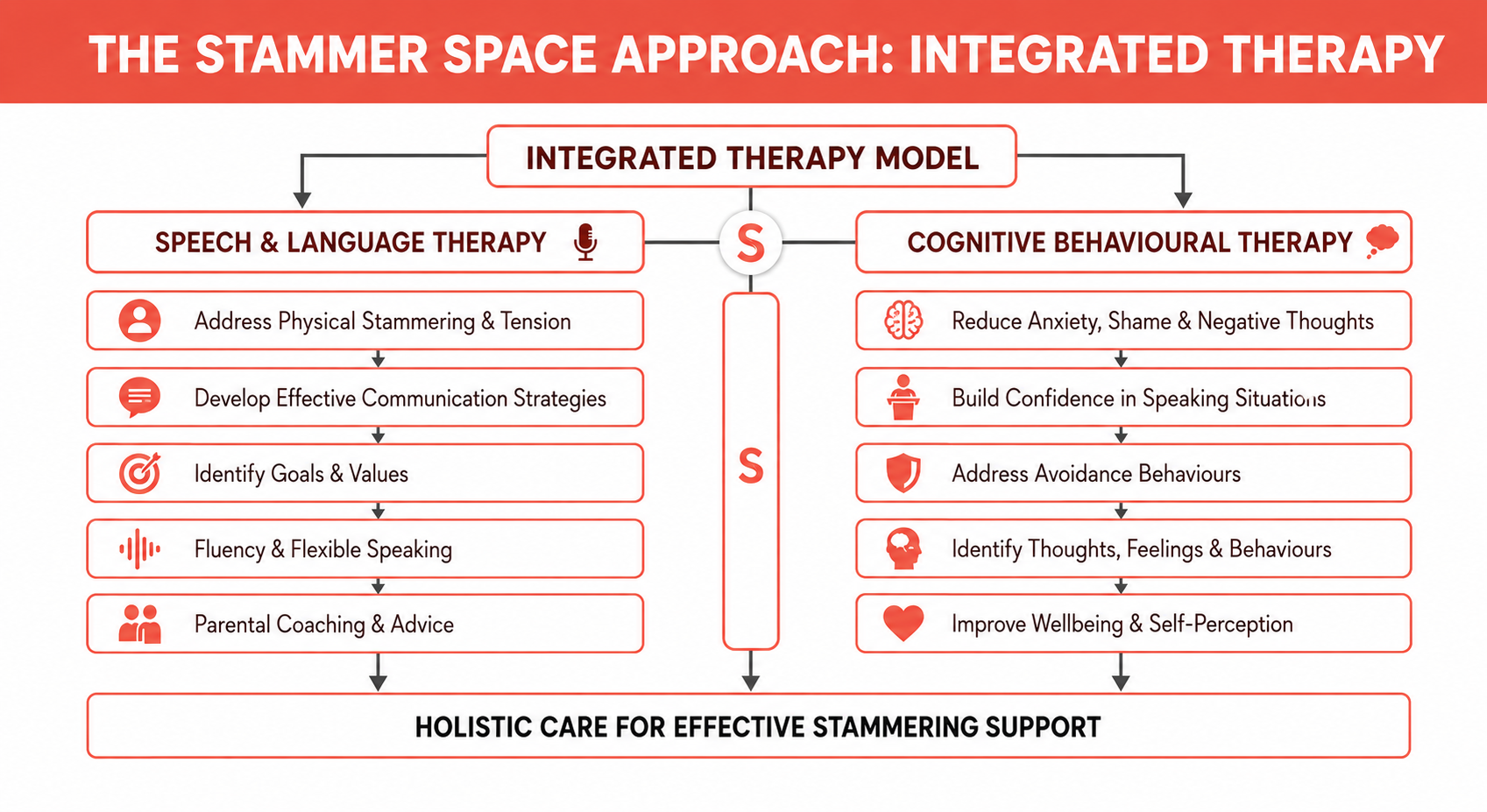
Our joint approach brings together two clinical specialisms in a coordinated and clearly defined way. Speech and Language Therapy focuses on understanding individual stammering patterns, supporting communication within families and developing ways of speaking with reduced tension and effort. Cognitive Behavioural Therapy focuses on how thoughts, emotions and behaviours interact, and how this can influence confidence, participation and everyday communication. Both clinicians contribute to a shared assessment and a joint therapy plan, while each works within their own specialist scope. This means clients receive support for both the physical and psychological aspects of stammering without needing to navigate separate services or disconnected approaches.
The Impact on Daily Life
For many people who stammer, difficulty does not sit only in speech mechanics. The internal experience, including anticipation, fear of judgement, anxiety around communication and the effort to mask or avoid stammering, can have a significant impact on daily life. A joint SLT and CBT model ensures that the visible features of stammering and the less visible emotional and cognitive elements are supported with equal care and depth.
Our Belief in Stammering Support
Stammering does not need to be fixed. It can be understood, supported and lived with in a way that feels more comfortable, confident and authentically yours. Our aim is to help reduce struggle and tension in speaking, decrease avoidance and fear around communication and build confidence, self-advocacy and identity ownership. We hope that this combined approach represents meaningful progress for people who stammer, and contributes to a wider shift within both NHS and private services towards fully integrated, specialist support.
Contact us
Interested in working together? Fill out some info and we will be in touch shortly. We can’t wait to hear from you!